
Watching Doubtful Sound wildlife responsibly
Doubtful Sound wildlife belongs to an extensive fjord landscape within Fiordland National Park. Bottlenose dolphins, New Zealand fur seals and Fiordland crested penguins, also called tawaki, are possible encounters. A nature cruise combines that possibility with interpretation of the surrounding environment. Choose the journey because time on the fjord and a nature guide appeal, rather than making one animal the condition for a successful day.
The two cruise formats here offer nature commentary or a specialist nature guide. A day excursion from Queenstown suits a return to the same base; an overnight voyage makes sleeping aboard part of the experience. Neither format promises a particular sighting. For the wider practical comparison, read about day cruises and overnight cruises.
Nature cruises
The Queenstown day trip includes nature-guide commentary; the overnight cruise has a specialist nature guide. Wildlife sightings are never guaranteed.
Hand-picked tours, booked through GetYourGuide and Viator. Prices are indicative starting prices in US dollars (as of October 2026). Tap a tour for live availability and the current price in your currency.
Overnight fjord cruise with nature guide
- Specialist nature guide
- Dinner
- Breakfast
The trip includes a Lake Manapouri cruise and coach transfers over Wilmot Pass. Confirm the night option; wildlife sightings are not guaranteed.
Check availability →
Fjord day trip from Queenstown
- Round-trip coach transport from Queenstown
- Round-trip cruise across Lake Manapouri
- Commentary by nature guides
The fjord cruise lasts three hours. Wildlife encounters are not guaranteed.
Check availability →Nature cruises through the fjord
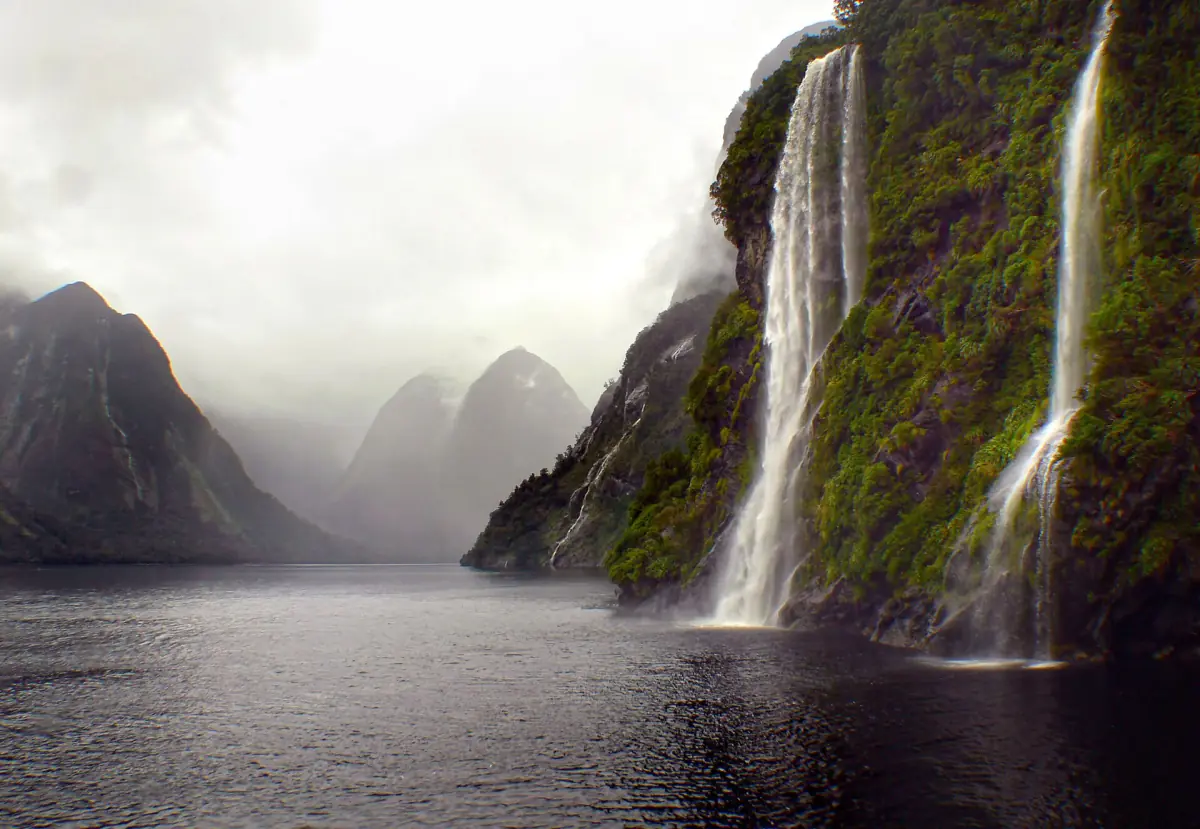
A Queenstown day excursion with nature commentary and an overnight voyage with a specialist nature guide offer different ways to spend time in the fjord landscape.
Bottlenose dolphins and chance encounters
A small resident population of bottlenose dolphins lives in the Doubtful Sound complex. Resident means associated with this area; it does not turn a boat journey into an appointment with the animals. Their presence along a route varies, and a cruise should continue to make sense even when dolphins remain out of sight. Avoid building a schedule around a predicted encounter or treating a photograph from another journey as a daily occurrence.
DOC's local protection measures keep encounters incidental. Boats should not divert from their route to seek dolphins, and radio reports should not be used to draw other vessels towards them. Dolphins can initiate contact themselves. When the crew maintains its route instead of following an animal, that restraint is part of responsible viewing. Allow space and follow crew instructions rather than requesting a closer approach.
Fur seals and tawaki
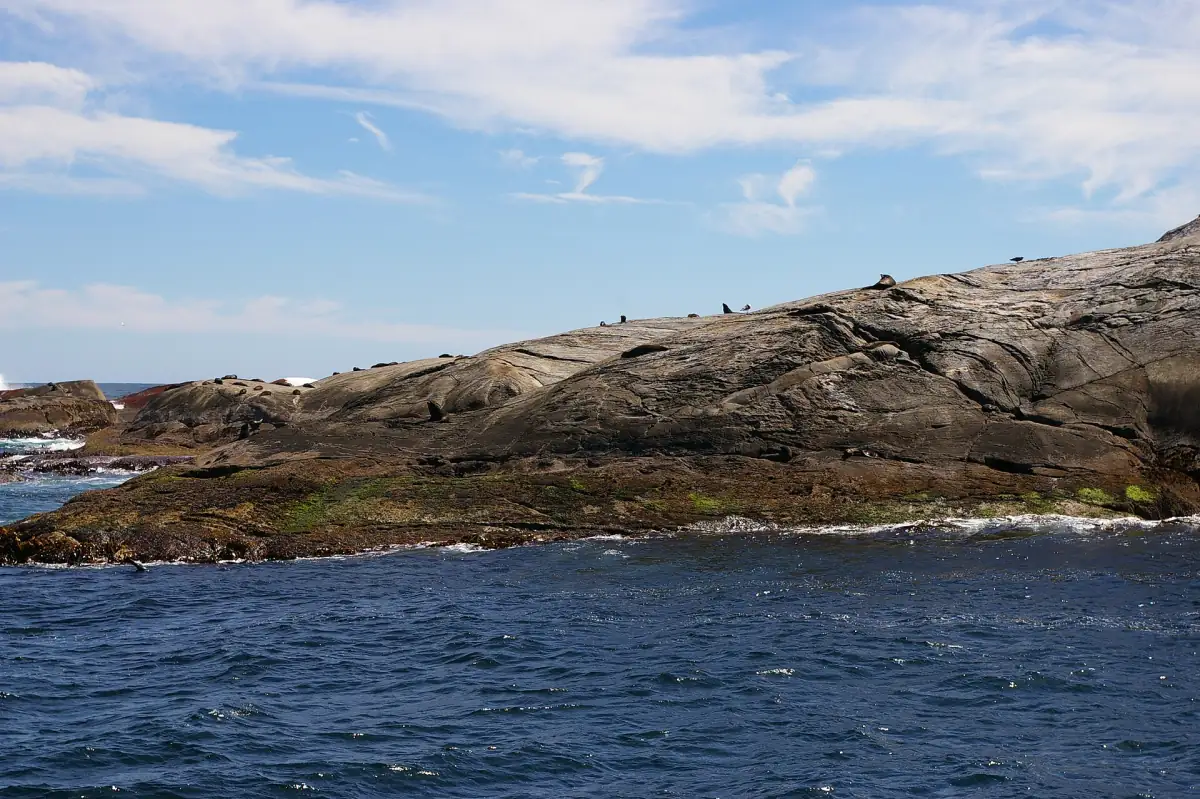
New Zealand fur seals and tawaki are among the animals that may be seen, with observations varying by day and season. Native birds and seabirds also form part of the natural setting. Keep the whole coastline in view instead of concentrating only on dolphins. The nature commentary can provide context for the landscape regardless of which species appear during the sailing.
A seal resting ashore needs an unobstructed route back to the sea. DOC advises people on land to stay at least 20 metres away where possible, and boats to remain at least 20 metres from the relevant water's edge near seals. These are seal rules, rather than a single distance to apply to every animal. For tawaki, follow local instructions and avoid approaching birds for a photograph.
Viewing distances and marine reserves
Particular dolphin protection zones extend 200 metres out from the shore in designated parts of the complex. Boats must stay out when dolphins are present. Within these zones the limit is 5 knots or idle speed. This local shoreline arrangement is separate from DOC's general marine mammal guidance and should not be read as a universal 200 metre boundary around each dolphin.
The general guidance calls for idle speed without a wake within 300 metres of marine mammals, with no more than three vessels, including aircraft, nearby. Animals should not be encircled, fed, touched or have their path cut off. Passengers can support the crew by watching without trying to direct a pursuit. Keeping a clear view from the boat is compatible with leaving the animal's route open.
Marine reserves add another layer of protection. Te Awaatu Channel lies between Bauza and Secretary Island and has strong tidal currents; anchoring is prohibited across much of the reserve. A cruise through protected scenery should therefore be understood as a guided visit to a living environment. It is not an invitation to leave the boat or arrange an improvised water activity.
Choose the journey as well as the wildlife
The Queenstown day excursion includes return coach transport, the Lake Manapouri crossing, the Wilmot Pass journey and a three-hour fjord cruise, with driver and nature-guide commentary. Food and drinks are extra. The overnight option includes the lake cruise, pass coach transfers, a specialist nature guide, dinner and breakfast. Choose by starting point and whether sleeping aboard fits the trip, then use the access guide to plan the connections.
Wildlife questions
Are dolphins guaranteed on a cruise?
Encounters are incidental. Bottlenose dolphins live in the area, but they decide whether to approach and a cruise carries no sighting promise. Nature interpretation and the fjord journey are the consistent reasons to choose these trips.
Which other animals might appear?
New Zealand fur seals, tawaki and native birds or seabirds are possible observations. What appears varies with the day and season, so keep expectations open rather than choosing a trip for a fixed species checklist.
Should a boat follow dolphins?
The local DOC measures call for incidental encounters without route diversions to seek dolphins. Let the crew manage the vessel and allow animals to initiate contact while keeping their onward route clear.